
Wednesday, March 9
Thursday, March 3
MUSHROOM ODORS
R. G. Benedict & D. E. Stuntz Pacific Search, September 1975
The far‑roaming pothunter may encounter 27 different odors in fresh mushrooms that grow in the Pacific Northwest. In the words of Jimmy Durante, “The nose knows!”
The keys and descriptions in the average mushroom field book tell little or nothing about the characteristic odors of certain mushrooms that could give additional clues to their identity.
Sometimes a specimen contains only traces of the chemicals responsible for its aroma. You need to split or cut the fresh mushroom and immediately smell the inner cut portions. Carry notepaper with you on which to record any odor you may detect, along with other identifying features, and insert this record in the collection sack with the specimens.
Though odor perception and definitions vary widely among individuals, mushroom odors are arbitrarily divided into three groups: pleasant, neutral, and unpleasant. Although there should be no disagreement within the “pleasant odor” group, some readers undoubtedly would shift some of the neutral odors to “unpleasant” or vice versa.
Odors in mushrooms usually arise from volatile essential oils that contain mixtures of chemicals like esters, aldehydes, ketones, and amines. A simple example of a pleasant‑smelling compound is ethyl butyrate, the odor of pineapple. Examples of aldehydes are compounds like formaldehyde and acetaldehyde, which give off pungent, unpleasant smells. In some cases more than one chemical in the same group, or representative chemicals of more than one group (e.g., both esters and aldehydes), may contribute to the combination.
Amines always contain the element nitrogen. The simplest organic one is methylamine. This substance has a smell similar to, but more unpleasant than, household ammonia.
We begin with the pleasant aromas and, where known, provide an indication of some of the chemical compounds involved. Edible mushrooms with the pleasant aroma of almond extract are Phaeolepiota aurea, Hygrophorus bakerensis, H. agathosmus, and Agaricus sylvicola. Non‑edible fungi with similar odor are Russula laurocerasi and R. foetens. The odor of R. foetens changes as the mushroom ages and becomes extremely disagreeable, in fact, nauseating. Almond‑extract odor probably results from a combination of chemicals that include benzaldehyde and close relatives.
Several species of mushrooms, none of which have culinary interest, exude a fragrant or sweet odor. Among the spine fungi, the sweet smell of Hydnellum peckii helps to set it apart from related species. Clitocybe morganii and Mycena odora bear a tutti‑frutti chewing gum smell. Burnt sugar is a rare scent in the fleshy fungi, but is well documented in Hebeloma sacchariolens.
The spicy fragrance of Lactarius helvus, only rarely found on the Pacific coast, is an odd combination of cinnamon and gunpowder smoke. The distinctive smell of Pholiota squarrosoides, a wood‑inhabiting fungus, recalls cinnamon buns. Without doubt an analytical chemist could extract cinnamaldehyde or cinnamic acid from this fungus.
Grape soda pop aroma has been noted only in Squamanita odorata and Clitocybe clavata, the grape clitocybe. Japanese forms of C. clavata have been known to cause illness when an alcoholic beverage is consumed with the mushroom. The aroma of specimens in our region is probably due to methylanthranilate, the compound used to prepare synthetic grape flavor.
Most common of the pleasant aromas is anise oil. It occurs in Agaricus augustus, A. pusillus, A. micromegethus, A. niveus, Clitocybe odora, and C. suveolens. Some of the tough, woody fungi of the genus Lentinus also give off this pleasant smell. A well‑known representative of this genus is L. lepideus which grows on dead stumps and logs in fall. Anise oil contains anethole. It is sometimes used in pharmacy as a laxative, frequently combined with licorice.
Fruity aromas, uncommon in fleshy fungi, are best represented by pear and apricot. The fragrance of pear is found in Inocybe pyriodora, Cortinarius traganus, and C. fragrans. An apricot‑like scent emanates from Cantharellus cibarius, the popular yellow chanterelle.
Lactarius camphoratus, an uncommon mushroom in this area, has the sweet aromatic odor of fenugreek. A legume, native to Europe, produces these seeds, which serve as an ingredient in curry powder and in artificial maple flavoring.
The subtle, aromatic odor of Armillaria ponderosa [=Tricholoma magnivelare] and A. caligata is reminiscent of tincture of benzoin. Benzoin is a dry, brittle, fragrant resin from certain plants that grow in Java and Sumatra. It is used in perfumes and medicines. Local mushroom hunters refer to this odor as the “matsutake odor” or pine scent. (“Matsutake” is the Japanese name for A. ponderosa.) Chemical compounds isolated from the Japanese matsutake are methyl cinnamate and matsutake alcohol.
Many fleshy fungi have no characteristic odor. Others have a difficult‑to‑define combination of light but pleasant aromas, often referred to as the typical mushroom odor. Familiar specimens of this type are Collybia dryophila, Flammulina velutipes, Lepista nuda, and the Agaricus bisporus that you find in your favorite supermarket’s produce section.
The pronounced smell of green corn, not yet chemically defined, occurs in the poisonous Inocybe sororia and Inocybe species #3399. It is also detected in Cortinarius superbus and Cystoderma amianthinum.
Few species of amanitas have telltale aromas, but one with a sprouting‑potato odor is Amanita porphyria, a non‑edible form. The chances of picking a white‑gilled, white‑spored, potato‑scented, mushroom that is not A. porphyria are rare. Mushrooms with similar odor are Volvariella speciosa and Pluteus cervinus. Both have pink gills and spores, but P. cervinus lacks a volva at the base of the stem.
Cucumber, farinaceous, and rancid‑linseed‑oil odors are found in numerous mushrooms. The main difference between these three odors is that of intensity. The mild odor of cucumber is revealed in Galerina marginata, G. autumnalis, G. venenata, and Phaeocollybia kauffmanii. A farinaceous smell, often expressed as “mealy” or “branny,” is attributed to Tricholoma flavovirens, Entoloma lividum, and E. sericeum. The strong odor of rancid linseed oil is highly noticeable in Armillaria zelleri, Tricholoma pessundatum, T. vaccinum, T. populinum, and Clitocybe sinopica. An interesting but uncommon smell, somewhat like tincture of iodine, is known as iodoform. It describes the scent from non‑edible Polyporus hirtus and Mycena iodiolens. Tricholoma saponaceum, a common mushroom of low quality for the pot, has a soapy odor.
Among the unpleasant odors, categories of fishy, spoiled hamburger, and chestnut catkins are much alike and occur primarily in species of the large, poisonous genus Inocybe. Common examples are I. pudica and I. napipes. Similar odors appear in Verpa bohemica and the Morchella species. The edible Russula xerampelina smells like shrimp. Pothunters say that the odor from cooking this species will drive you out of the kitchen, and recommend it be cooked outdoors. These odors result from simple amines like methyl, ethyl, and propyl amine.
Mushrooms in the Amanita solitaria and A. chlorinosma groups often smell like chlorine household bleach (sodium hypochlorite). Skunk cabbage is a rare aroma in this region’s fungi, but is unmistakable in Clitocybe nebularis and C. alba.
Several species of Marasmius have chemicals similar to those in garlic. One small carpophore of M. scorodonius, M. prasiosmus, or M. foetidum could add considerable flavor to a pot roast. Oil of garlic is allyl sulphide.
Acetylene, a flammable gas, is almost odorless when pure. Commercial acetylene, made by adding water to calcium carbide, contains impurities that give it an odor similar to garlic. Certain basidiomycetes contain antibiotic substances which inhibit the growth of bacteria or fungi. One such antibiotic is Diatretyn I, found in Clitocybe diatreta. Some of these chemicals are unstable and release acetylene when they decompose. The sharp orders of Clitocybe inversa and Ripartites helomorpha, especially when wet, are probably due to the decomposition of polyacetylenic compounds present.
Hebeloma crustuliniforme and H. mesophaeum possess a nauseous combination of radish and the odious organic solvent, pyridine. The pretty, lavender‑colored Mycena pura and the hallucinogenic Psilocybe cyanescens have a mild radish scent.
As coal is converted to coke, the coal gas vapors contain many odious chemicals in addition to odor‑free methane and hydrogen gases. Mushroom scents arising from Tricholoma inamoenum, T. sulphureum, and Lepiota bucknallii are said to resemble those in the unpurified mixture of vapors.
Stinkhorns are highly specialized fleshy fungi with the nauseating odors of decaying flesh. They are so strong to the nose that one can detect their presence 50 feet downwind. Although they are rare west of the Cascades, one occasionally encounters Mutinus caninus and, rarely, Lysurus gardneri. The stench odors arise from fly‑attracting aldehydes not commonly encountered in chemistry. One such compound is phenylacetaldehyde, isolated from Phallus impudicus.
Agaricus placomyces and A. hondensis have a phenol or creosote odor. Violent gastronomic upsets await anyone foolish enough to eat the odorous forms of these fungi.
When certain species of Mycena are crushed between thumb and forefinger, the distinctive odor of nitrous acid or fuming nitric acid can be detected.
In many species of mushrooms, including Marasmius oreades, the odor of hydrogen cyanide can be detected.
Perhaps this article will stimulate those pothunters who have not done so in the past to make better use of their olfactory faculties. There is no rule of thumb regarding mushroom odors, but in practically all cases, either the unpleasant‑smelling specimens have odors which are not dissipated upon cooking, or the mushrooms are poisonous, or both. In one incident, a woman suffered muscarinic poisoning when she ate some specimens not described in the 1962 publication of the book The Savory Wild Mushroom (revised and enlarged in 1971). These turned out to be Inocybe pudica, and had she taken the time to smell them first we doubt if she would have been tempted.
DR. STUNTZ was a professor of botany at the University of Washington and scientific advisor to the Puget Sound Mycological Society. DR. BENEDICT, a semi‑retired microbiologist, was formerly a research associate professor of pharmacognosy in the University of Washington School of Pharmacy.


Wednesday, March 2
Medicinal Mushrooms
Fungi Contain Antiviral, Anticancer, and Other Healing Compounds
Oct 30, 2009 Stephen Allen Christensen
Mushrooms and related fungi have played important roles throughout human history. The earliest archeological record of medicinal mushroom use comes from a 5,500-year-old Tassili cave image which depicts a dancing, mushroom-wreathed shaman; the oldest written record of mushrooms as medicinals is in an Indian medical treatise from 3000 BC.
In 1991, hikers in the Italian Alps discovered the well-preserved remains of a man who had died over five thousand years ago. This so-called “Iceman” possessed a knapsack that contained, among other things, a string of dried medicinal mushrooms. Mushrooms have been used as food, as hallucinogens in rituals, as healing agents, and (occasionally) as vehicles for intentional poisonings. (Mushroom Civilization and History in Growing Gourmet and Medicinal Mushrooms, Paul Stamets. Ten Speed Press, 1993:1-4)
During the last half of the 20th century, cultivation techniques were developed that allowed mass production of some mushrooms – about 40 species are now grown commercially – and technological advances permitted the isolation of many of the active compounds from medicinal mushrooms. Some of these agents exhibit remarkable therapeutic properties – indeed, a few are marketed as pharmaceuticals in the Far East – but our understanding and use of these agents, particularly in the Western hemisphere, are as yet only rudimentary.
Medicinal Compounds Found in Mushrooms – and Their Potential Uses
Of the more than 270 mushroom species that exhibit medicinal properties, only a few have been studied for their chemical constituents. Although mushrooms vary widely in biology, it is likely that many of the medicinal compounds are shared among different species. Important compounds discovered to date include polysaccharides (long chains of sugar-like molecules), beta-D-glucans, and proteoglycans.
Pharmacological properties, actions, and potential uses for these compounds include:
Antitumor
Antibacterial
Antiviral
Antifungal
Antioxidant
Antihypertensive
Cholesterol-lowering
Immunostimulating (increase immune activity)
Immunomodulating (decrease or balance immune activity)
In Japan and China, three mushrooms have been used to generate pharmaceutical-grade medications that are used in the treatment of cancer. Polysaccharides from these fungi are marketed under the trade names Krestin or PSK (from Trametes versicolor, the “turkey tail” mushroom); Lentinan (from Lentinus edodes, the shiitake mushroom); and Sonifilan (from Schizophyllum commune, the split-gill polypore).
Krestin is employed in the treatment of gastrointestinal, lung, and breast cancers; Lentinan is used for stomach cancers; and Sonifilan has found application in the treatment of cervical cancer.
Popular Medicinal Mushrooms and Their Uses
Although the constituents of a few commonly-used mushrooms are well researched and some of their properties are described in various biographies, most of the purported benefits of medicinal mushrooms are unsupported by the scientific literature. This is not necessarily because these benefits are nonexistent; rather, it is because the research simply hasn’t been done. (See Medicinal Mushrooms and Cancer)
Medicinal mushrooms that have been successfully cultivated (and their properties) include:
Agaricus brasiliensis (Royal Sun Blazei): antitumor; antiviral; blood sugar modulator; cholesterol reducer; immune support
Cordyceps sinensis: antibacterial; antioxidant; antitumor; antiviral; antihypertensive; blood sugar modulator; heart, liver, lung, nerve, and kidney tonic; cholesterol reducer; sexual potentiator
Fomes fomentarius (Amadou): antibacterial; antiviral
Fomitopsis officinalis (Agarikon): antibacterial; anti-inflammatory; antiviral
Ganoderma applanatum (Artist’s Conk): antibacterial; anti-inflammatory; antitumor; lung tonic
Ganoderma lucidum (Reishi or Ling Chi): same as for Cordyceps, plus antifungal and anti-inflammatory
Ganoderma oregonense (Oregon Polypore): antibacterial; antitumor; heart, lung, and nerve tonic; immune support
Grifola frondosa (Maitake or Hen-of-the-Woods): antibacterial; antifungal; antitumor; antiviral; antihypertensive; blood sugar modulator; immune support; lung and nerve tonic
Hericium erinaceus (Yamabushitake or Lion’s Mane): antibacterial; anti-inflammatory; antitumor; nerve tonic
Innotus obliquus (Chaga): antibacterial; anti-inflammatory; antitumor; antiviral; blood sugar modulator; immune support; liver tonic
Lentinula edodes (Shiitake): antibacterial; antifungal; antitumor; antiviral; antihypertensive; blood sugar modulator; cholesterol reducer; immune support; kidney and liver tonic; sexual potentiator
Phellinus linteus (Mesima): antibacterial; anti-inflammatory; antitumor; antiviral
Piptoporus betulinus (Birch Polypore): antibacterial; anti-inflammatory; antiviral; immune system support
Pleurotus ostreatus (Hiratake or Pearl Oyster): antibacterial; anti-inflammatory; antiviral; antihypertensive; heart and nerve tonic; cholesterol reducer; immune support
Polyporus sulphureus (Chicken-of-the-Woods): antibacterial
Polyporus umbellatus (Zhu Ling): antibacterial; anti-inflammatory; antitumor; antiviral; liver and lung tonic; immune support
Schizophyllum commune (Suehirotake or Split-gill Polypore): antifungal; antitumor; antiviral
Trametes versicolor (Yun Zhi or Turkey Tail): antibacterial; antifungal; antioxidant; antitumor; antiviral; kidney and liver tonic; immune support
Humans have enjoyed the benefits of medicinal mushrooms for thousands of years, but the true extent of their usefulness is largely untouched. Hopefully, further research will confirm what traditional healers have always known: Mushrooms are a repository of untold remedies.
Read more at Suite101: Medicinal Mushrooms: Fungi Contain Antiviral, Anticancer, and Other Healing Compounds http://www.suite101.com/content/medicinal-mushrooms-a164130#ixzz1FOi5dkSz
Oct 30, 2009 Stephen Allen Christensen
Mushrooms and related fungi have played important roles throughout human history. The earliest archeological record of medicinal mushroom use comes from a 5,500-year-old Tassili cave image which depicts a dancing, mushroom-wreathed shaman; the oldest written record of mushrooms as medicinals is in an Indian medical treatise from 3000 BC.
In 1991, hikers in the Italian Alps discovered the well-preserved remains of a man who had died over five thousand years ago. This so-called “Iceman” possessed a knapsack that contained, among other things, a string of dried medicinal mushrooms. Mushrooms have been used as food, as hallucinogens in rituals, as healing agents, and (occasionally) as vehicles for intentional poisonings. (Mushroom Civilization and History in Growing Gourmet and Medicinal Mushrooms, Paul Stamets. Ten Speed Press, 1993:1-4)
During the last half of the 20th century, cultivation techniques were developed that allowed mass production of some mushrooms – about 40 species are now grown commercially – and technological advances permitted the isolation of many of the active compounds from medicinal mushrooms. Some of these agents exhibit remarkable therapeutic properties – indeed, a few are marketed as pharmaceuticals in the Far East – but our understanding and use of these agents, particularly in the Western hemisphere, are as yet only rudimentary.
Medicinal Compounds Found in Mushrooms – and Their Potential Uses
Of the more than 270 mushroom species that exhibit medicinal properties, only a few have been studied for their chemical constituents. Although mushrooms vary widely in biology, it is likely that many of the medicinal compounds are shared among different species. Important compounds discovered to date include polysaccharides (long chains of sugar-like molecules), beta-D-glucans, and proteoglycans.
Pharmacological properties, actions, and potential uses for these compounds include:
Antitumor
Antibacterial
Antiviral
Antifungal
Antioxidant
Antihypertensive
Cholesterol-lowering
Immunostimulating (increase immune activity)
Immunomodulating (decrease or balance immune activity)
In Japan and China, three mushrooms have been used to generate pharmaceutical-grade medications that are used in the treatment of cancer. Polysaccharides from these fungi are marketed under the trade names Krestin or PSK (from Trametes versicolor, the “turkey tail” mushroom); Lentinan (from Lentinus edodes, the shiitake mushroom); and Sonifilan (from Schizophyllum commune, the split-gill polypore).
Krestin is employed in the treatment of gastrointestinal, lung, and breast cancers; Lentinan is used for stomach cancers; and Sonifilan has found application in the treatment of cervical cancer.
Popular Medicinal Mushrooms and Their Uses
Although the constituents of a few commonly-used mushrooms are well researched and some of their properties are described in various biographies, most of the purported benefits of medicinal mushrooms are unsupported by the scientific literature. This is not necessarily because these benefits are nonexistent; rather, it is because the research simply hasn’t been done. (See Medicinal Mushrooms and Cancer)
Medicinal mushrooms that have been successfully cultivated (and their properties) include:
Agaricus brasiliensis (Royal Sun Blazei): antitumor; antiviral; blood sugar modulator; cholesterol reducer; immune support
Cordyceps sinensis: antibacterial; antioxidant; antitumor; antiviral; antihypertensive; blood sugar modulator; heart, liver, lung, nerve, and kidney tonic; cholesterol reducer; sexual potentiator
Fomes fomentarius (Amadou): antibacterial; antiviral
Fomitopsis officinalis (Agarikon): antibacterial; anti-inflammatory; antiviral
Ganoderma applanatum (Artist’s Conk): antibacterial; anti-inflammatory; antitumor; lung tonic
Ganoderma lucidum (Reishi or Ling Chi): same as for Cordyceps, plus antifungal and anti-inflammatory
Ganoderma oregonense (Oregon Polypore): antibacterial; antitumor; heart, lung, and nerve tonic; immune support
Grifola frondosa (Maitake or Hen-of-the-Woods): antibacterial; antifungal; antitumor; antiviral; antihypertensive; blood sugar modulator; immune support; lung and nerve tonic
Hericium erinaceus (Yamabushitake or Lion’s Mane): antibacterial; anti-inflammatory; antitumor; nerve tonic
Innotus obliquus (Chaga): antibacterial; anti-inflammatory; antitumor; antiviral; blood sugar modulator; immune support; liver tonic
Lentinula edodes (Shiitake): antibacterial; antifungal; antitumor; antiviral; antihypertensive; blood sugar modulator; cholesterol reducer; immune support; kidney and liver tonic; sexual potentiator
Phellinus linteus (Mesima): antibacterial; anti-inflammatory; antitumor; antiviral
Piptoporus betulinus (Birch Polypore): antibacterial; anti-inflammatory; antiviral; immune system support
Pleurotus ostreatus (Hiratake or Pearl Oyster): antibacterial; anti-inflammatory; antiviral; antihypertensive; heart and nerve tonic; cholesterol reducer; immune support
Polyporus sulphureus (Chicken-of-the-Woods): antibacterial
Polyporus umbellatus (Zhu Ling): antibacterial; anti-inflammatory; antitumor; antiviral; liver and lung tonic; immune support
Schizophyllum commune (Suehirotake or Split-gill Polypore): antifungal; antitumor; antiviral
Trametes versicolor (Yun Zhi or Turkey Tail): antibacterial; antifungal; antioxidant; antitumor; antiviral; kidney and liver tonic; immune support
Humans have enjoyed the benefits of medicinal mushrooms for thousands of years, but the true extent of their usefulness is largely untouched. Hopefully, further research will confirm what traditional healers have always known: Mushrooms are a repository of untold remedies.
Read more at Suite101: Medicinal Mushrooms: Fungi Contain Antiviral, Anticancer, and Other Healing Compounds http://www.suite101.com/content/medicinal-mushrooms-a164130#ixzz1FOi5dkSz
Tuesday, March 1

| Making Spore Prints by Michael Kuo While a single mushroom spore can't be seen by the naked eye, a pile of many spores can--and the color of a mushroom's spores, seen en masse, is a crucial identification feature. Obtaining a mushroom's "spore print" is therefore an essential step in the identification process. Before going through the nuts and bolts of making a spore print at home, it is worth noting that mushrooms frequently make their own spore prints, in nature. If you have ever noticed colored dust covering a leaf or the ground beneath a mushroom's gills or pores, you have probably witnessed this phenomenon. Tightly clustered mushrooms, in fact, frequently leave spore prints on one other, since caps overlap. In order to make a spore print at home, you will need to have a relatively mature mushroom. Buttons, young mushrooms, and mushrooms with some kind of a covering over their gills or pores (a partial veil) are not likely to drop spores in order to make a print. Remove the stem from smaller mushrooms and place the cap, gills or pores downward, on a piece of paper or glass. For larger mushrooms, slice off a section of the cap and use only the section. Place a cup or glass upside-down on top of your mushroom, to keep air currents away. While some spore prints can appear within a few hours, it's often best to wait overnight, just to be sure. When you remove the cup and lift the mushroom cap, you should find a "print" like the ones illustrated to the right. If you have been careful not to move the mushroom while the print was developing, you may find that the spore print reflects the pattern of the mushroom's gills or pores, since the spores fell directly downward. Some field guides advocate using black paper for spore prints, since white prints show up more easily. Then again, brown and black prints don't show up on black paper as well as they do on white paper. I have solved this problem for myself by using glass, which can be held against light and dark backgrounds, rather than paper. In fact I usually use a microscope slide, since I will also be examining spores under the microscope--but if you are not going to be using a microscope, any (safe) piece of glass will suffice. The color of the spore print is what you will compare with descriptions from field guides and keys. Interpreting color can be very subjective--and mycologists have tried several times to "standardize" the interpretations, without much success. But while subtle differences (like, between "white" and "creamy") may be perplexing, distinguishing a white spore print from a brown one or a pink one is easy enough, and it will help you enormously in identifying a mushroom. More information on assessing colors, of spore prints and the mushrooms themselves, can be found on the page for the genus Russula. For mushrooms belonging to the Ascomycetes, like the morels and false morels, a spore print is obtained using a similar method. However, since these mushrooms have tiny spore jets that forcibly eject the spores, you will place a piece of the cap on the paper or glass and expect the spore print around the mushroom section (as well as underneath it, if you have placed the spore-producing side downwards). |   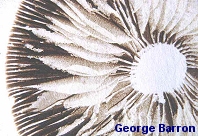 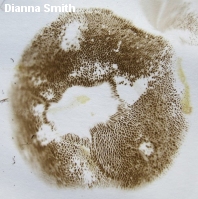 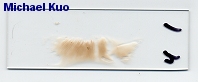  © MushroomExpert.Com |
Kuo, M. (2006, November). Making spore prints. Retrieved from the MushroomExpert.Com Web site: http://www.mushroomexpert.com/spore_print.html
Ganoderma lucidum in cancer research
Leukemia Research 30 (2006) 767–768
Guest editorial
"Ganoderma lucidum, popular medicinal mushroom, has
been used as a home remedy in traditional Chinese medicine
(TCM) in many Asian countries during the past two millennia
[1]. The regular consumption of G. lucidum in the form
of tea or mushroom powder was believed to preserve the
human vitality and to promote longevity [2]. G. lucidum has
been also used for the prevention or treatment of a variety
of diseases including cancer [3]. Western medicine started
to accept natural product from the TCM and the popularity
of herbal therapies for the treatment of cancer have been
recently increasing in the United States [4]. Therefore, scientific
justification based on the elucidation of mechanisms
responsible for the biological effects of these natural products
could help for their validation in alternative or adjuvant
cancer therapies."
www.sciencedirect.com
Guest editorial
"Ganoderma lucidum, popular medicinal mushroom, has
been used as a home remedy in traditional Chinese medicine
(TCM) in many Asian countries during the past two millennia
[1]. The regular consumption of G. lucidum in the form
of tea or mushroom powder was believed to preserve the
human vitality and to promote longevity [2]. G. lucidum has
been also used for the prevention or treatment of a variety
of diseases including cancer [3]. Western medicine started
to accept natural product from the TCM and the popularity
of herbal therapies for the treatment of cancer have been
recently increasing in the United States [4]. Therefore, scientific
justification based on the elucidation of mechanisms
responsible for the biological effects of these natural products
could help for their validation in alternative or adjuvant
cancer therapies."
 |
| Ganoderma Lucidum (Reishi) |
Determining Odor and Taste by Michael Kuo The odor and taste of a mushroom can be important in the identification process. I'm aware that you probably don't need me to tell you how to use your sniffer and your taste buds--but there are a few things you may want to keep in mind when it comes to smelling and tasting mushrooms. Odors I take a piece of the mushroom (or a whole cap, in the case of small mushrooms) and crush it between my finger and thumb before trying to assess an odor. Usually the cap is the best part of the mushroom to test, but occasionally you will discover that some other part of the mushroom should be tested (for example, the stem bases in Agaricus). Some people cannot detect certain odors; I can't smell the "phenolic" odor in Agaricus species, but I can sniff out "farinaceous" from yards away. Experience will tell you which odors you are best at detecting. "Not distinctive" is probably the most common mushroom odor, but distinctive smells include:
Taste Since there are some deadly poisonous mushrooms out there, you should be careful when it comes to tasting mushrooms. One swallowed bite of Amanita bisporigera or Galerina marginata could contain enough poison to kill you. To be honest, it is doubtful that swallowing your spit after you have tasted and spit out a piece of deadly mushroom is likely to cause you any harm (sorry to be graphic, but I want to be as clear as possible). Still, it is better to be conservative in matters like this; please study and follow the guidelines below, and bear in mind that taste is only one of many features that can help you identify a mushroom.
|
Cite this page as:
Kuo, M. (2006, November). Determining odor and taste. Retrieved from the MushroomExpert.Com Web site: http://www.mushroomexpert.com/odortaste.html


Thursday, February 24
Adam Zaretsky
"For me, scientific research is just a minor subset of perversion. It is a particular way of exploring the forbidden. Life on earth is curious, intuitive and creative. Those things are not rationally explainable. There are invisible worlds all around us. So, scientists want to reveal them in ways that are repeatable, empirical and reductive. We artists may be looking for equally important isolated instances of amazingness, anomalous and singular, personal and subjective. We poke and prod, sniff and stare, even into those areas that defy the social norm. The process of analysis assumes, A Priori, that the unknown is seductive, that secrets unfold when interrogated. Otherwise, why look any deeper? And the methods of interrogation are extreme. Often, you must destroy something to comprehend it. It is for these reasons that I refer to the processes of artistic and scientific discovery as perverse practices."


Tuesday, February 22
Advanced Beauty
Advanced Beauty [advancedbeauty.org] is an ongoing exploration of digital artworks influenced by sound, as a collaboration between programmers, artists, musicians, animators and architects.
The first artwork collection includes a series of audio-reactive video sound sculptures, as manifestations of sound, sculpted by volume, pitch or structure of the soundtrack. The films embrace unusual video making processes, the visual programming language Processing, high-end audio analysis and fluid dynamic simulations alongside intuitive responses in traditional cell animation.
Rendered in the 1920 HD format, with 5:1 surround sound, each artist was given the same set of parameters to work within; to start, finish and exist within a white space, creating a seamless coherence, all sculptures sharing the same white environment.
Watch all the videos online here, or check out a few below.
See also lyrics and audio-responsive visual and rethinking the music video. Via Ping Mag.
http://infosthetics.com/archives/2008/11/advanced_beauty_audio-reactive_video_sound_sculptures.html
The first artwork collection includes a series of audio-reactive video sound sculptures, as manifestations of sound, sculpted by volume, pitch or structure of the soundtrack. The films embrace unusual video making processes, the visual programming language Processing, high-end audio analysis and fluid dynamic simulations alongside intuitive responses in traditional cell animation.
Rendered in the 1920 HD format, with 5:1 surround sound, each artist was given the same set of parameters to work within; to start, finish and exist within a white space, creating a seamless coherence, all sculptures sharing the same white environment.
Watch all the videos online here, or check out a few below.
See also lyrics and audio-responsive visual and rethinking the music video. Via Ping Mag.
http://infosthetics.com/archives/2008/11/advanced_beauty_audio-reactive_video_sound_sculptures.html
Friday, February 18
Pure Culture


Philip Ross is an inspiring american artist that works with living organisms as means of his artistic work. In a very controlled environment, Ross manipulates, nurtures and transforms a variety of living species into sculpture. Particularly interesting for our blog is his work Pure Culture, a series of sculptural objects from living mushrooms.


with:
Using fungus called Ganoderma lucidum, also known as Reishi or Ling Chi, Ross develop a living-art project that takes him around a year to complete, from finding and growing the mushrooms to the final result.
 Reishi Mushroom
The project here prsented, Life Like is inspired by the famous photo of Harold Edgerton called Milk Drop Coronet.
 Harold Edgerton Milk Drop Coronet
Reishi MushroomThe project here prsented, Life Like is inspired by the famous photo of Harold Edgerton called Milk Drop Coronet.
Harold Edgerton Milk Drop Coronet
Sunday, February 13
Thursday, February 10
SEEDMAGAZINE.COM § The Scent of Design
A designer who creates objects and spaces engages our sensations of touch, sight, and sometimes hearing. But what of our noses? Despite olfaction’s unmatched ability to evince memories and emotions—two essential objectives of design—smell is a relatively untapped medium in design practice. Combining scents with design was the challenge put to five designers, deemed “accidental perfumers,” by the organizers of HEADSPACE: On Scent as Design a symposium recently held in New York through the joint collaboration of Seed, Parsons the New School for Design, MoMA, International Flavors & Fragrances, and Coty. Selected for their diverse approaches to design, each “accidental perfumer” was paired with two professional perfumers from IFF and commissioned to explore how evanescent chemistries, when translated into smell, shape our experience of space and time. Though the participants chose to take their projects in radically different directions, they all came to the same conclusion: This is only the beginning. Many of the works you’ll see in this slideshow represent just the starting point for what promises to be a fruitful merger of olfaction and design.
Monday, January 24
sonja bäumel
I am based in Vienna.
In my projects I explore the boundaries between fashion design, art and science, to create multidisciplinary works. I am fascinated by the human body especially the (in)visible platform around it and by the applications this existing infrastructure can have.
Believing in symbiosis, networks, exchange and individuality, my work seeks to consider plants, animals, fungi and even bacteria as equally respected partners in finding solutions to global matters.
In my projects I explore the boundaries between fashion design, art and science, to create multidisciplinary works. I am fascinated by the human body especially the (in)visible platform around it and by the applications this existing infrastructure can have.
Believing in symbiosis, networks, exchange and individuality, my work seeks to consider plants, animals, fungi and even bacteria as equally respected partners in finding solutions to global matters.

http://www.sonjabaeumel.at/
crocheted membrane
The crocheted membrane project translates scientific data into crochet pieces representing a design language in-between science and fashion design.This project is a visualisation of how we could use our unique bacteria population to create new clothes which would react to our individual body temperature. The texture would get less thick on areas where we need less warmth and would built up on cold body zones and create new body related silhouettes.


Sunday, January 23
Donna Franklin and the Fibre Reactive dress from orange bracket fungi
Donna Franklin's 'living garment' is a dress that you grow, made from the Australian orange bracket fungi. It smells like red wine and feels like sludge when wet, but the cotton-like cellulose dress fits snugly as a second skin. The orange hue produced is an adaptation of the organism’s fruiting body stage.
The glowing and seemingly floating hybrid Fibre Reactive dress challenges us to consider how we as a society commodify and manipulate other living entities, and how that will manifest in the not too distant future through the physical and cultural impact of biotechnology.


http://bioalloy.org/o/information/donna-franklin.html

Growing Jewelry
Have you ever thought you might find mycelium even around your neck!?

Mycelium Pendant is a jewellery piece developed by Australian-based designer Elliat Rich.
Her work is focused on finding sustainable design solution that emphasize the "poetry of humble pleasure".
A new definition of sustainable design, indeed, not focused on new materials but more on a new way of thinking.
The Mycelium Pendant, for example, is a growing object and its owner is part of its formation or ... transformation, in a way.
In between two bezels a peace of regular bread starts its moulding process in a period of five to six days.
After changing colors, when the mould is right, the piece can be taken out of the environment and worn. At the end of the night the spent bread can be replaced with another and the cycle can begin again.
On the blog cool Booz we found something else, as well very interesting.
Product designer Hafsteinn Juliusson tries to redefine the modern values mainly the urban prospective.
If as metropolitans we are pushed to have little time for leisure and "old fashion" hobbies like gardening, well, here comes the revolution!
Your little private garden comes with you around town.
The owner need indeed to water regularly its jewelry and nurture it like any other plant.
Here we are again far from the well-known concept of eco-life but more in a new vision of the sustainable urban nature.
Her work is focused on finding sustainable design solution that emphasize the "poetry of humble pleasure".
A new definition of sustainable design, indeed, not focused on new materials but more on a new way of thinking.
The Mycelium Pendant, for example, is a growing object and its owner is part of its formation or ... transformation, in a way.
In between two bezels a peace of regular bread starts its moulding process in a period of five to six days.
After changing colors, when the mould is right, the piece can be taken out of the environment and worn. At the end of the night the spent bread can be replaced with another and the cycle can begin again.
On the blog cool Booz we found something else, as well very interesting.
Product designer Hafsteinn Juliusson tries to redefine the modern values mainly the urban prospective.
If as metropolitans we are pushed to have little time for leisure and "old fashion" hobbies like gardening, well, here comes the revolution!
Your little private garden comes with you around town.
The owner need indeed to water regularly its jewelry and nurture it like any other plant.
Here we are again far from the well-known concept of eco-life but more in a new vision of the sustainable urban nature.


Thursday, January 13
Moulds growing on fashion
n 1997 Belgium fashion designer Martin Margiela produced his first solo exhibition, 9/4/1615 at the Boijmans van Beuningen Museum of Rotterdam.
In collaboration with a microbiologist, Margiela treated his clothes with bacterias and moulds.
Caroline Evans in her book Fashion at the edge: spectacle, modernity and deathliness associate the traces of moulds in Margiela's work to the figure of the ragpicker who fascinated Baudelaire and Benjamin hundred years before. And even more, to the more actual concept of consumerism and consumption: "Ingrid Loschek has observed that, when he destroyed his clothes with mould and bacteria, Mergiela compared the natural cycle of creation and decay to the consumer cycle of buying and discarding."
In collaboration with a microbiologist, Margiela treated his clothes with bacterias and moulds.
Caroline Evans in her book Fashion at the edge: spectacle, modernity and deathliness associate the traces of moulds in Margiela's work to the figure of the ragpicker who fascinated Baudelaire and Benjamin hundred years before. And even more, to the more actual concept of consumerism and consumption: "Ingrid Loschek has observed that, when he destroyed his clothes with mould and bacteria, Mergiela compared the natural cycle of creation and decay to the consumer cycle of buying and discarding."


Subscribe to:
Posts (Atom)